Toolkits.
The systems I used, packaged for the person doing the job without the department.
I have run development, marketing, and the gala seating chart from the same desk at the same time. I know what it looks like when the show is the thing you actually know how to do and the donor list is the thing that keeps you up at night.
These toolkits are the systems I built for myself in those years, cleaned up and written down. Each one is a short guide in plain language, the working files I actually used, and the word-for-word scripts for the conversations that matter. Nothing in them is theory. They are what I did, what worked, and where I got it wrong.
They’re for a one- to three-person staff at a regional opera company, symphony, choir, dance company, or theater. If your donor program lives in your head and a spreadsheet you don’t trust, start here.
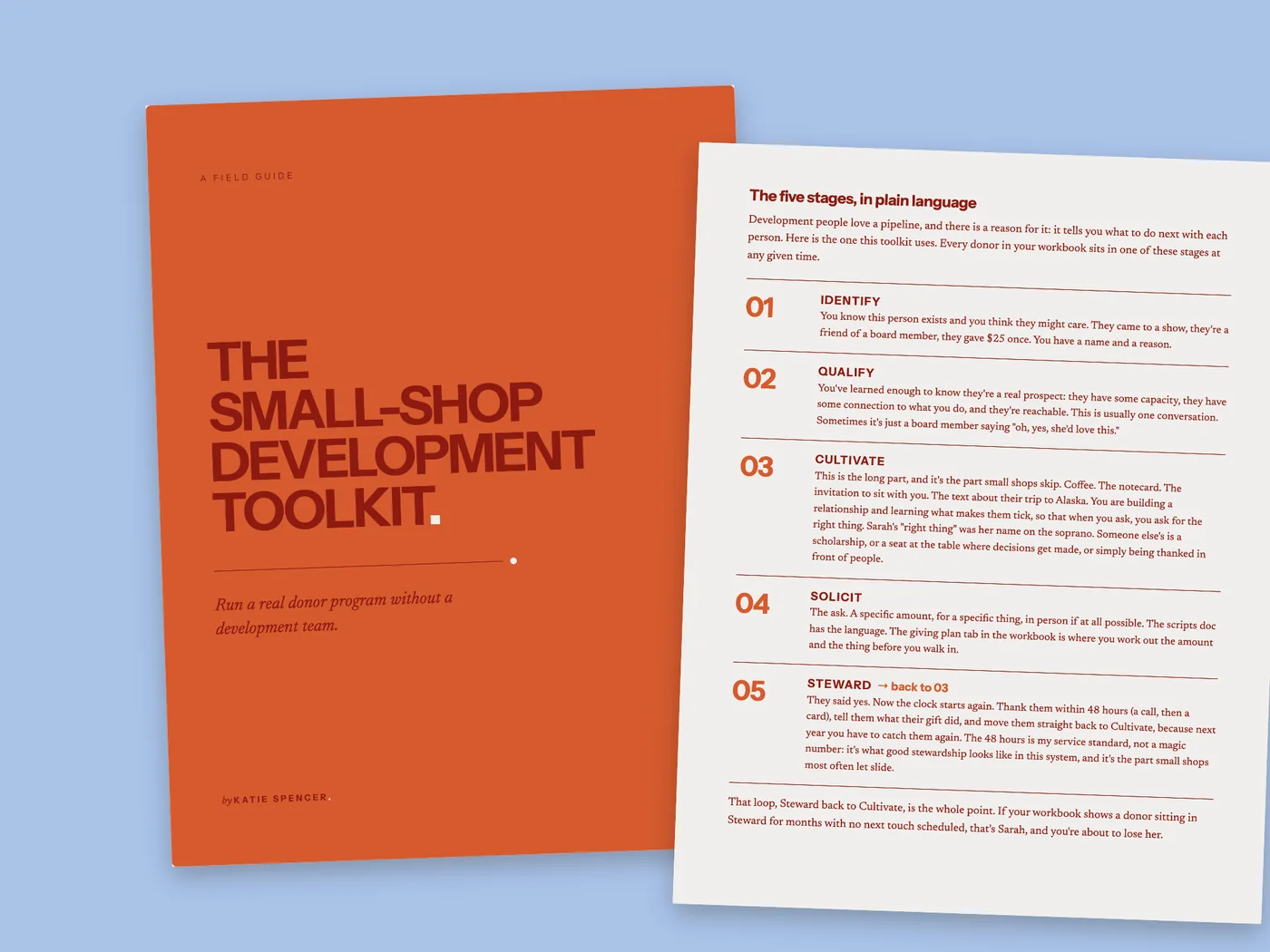
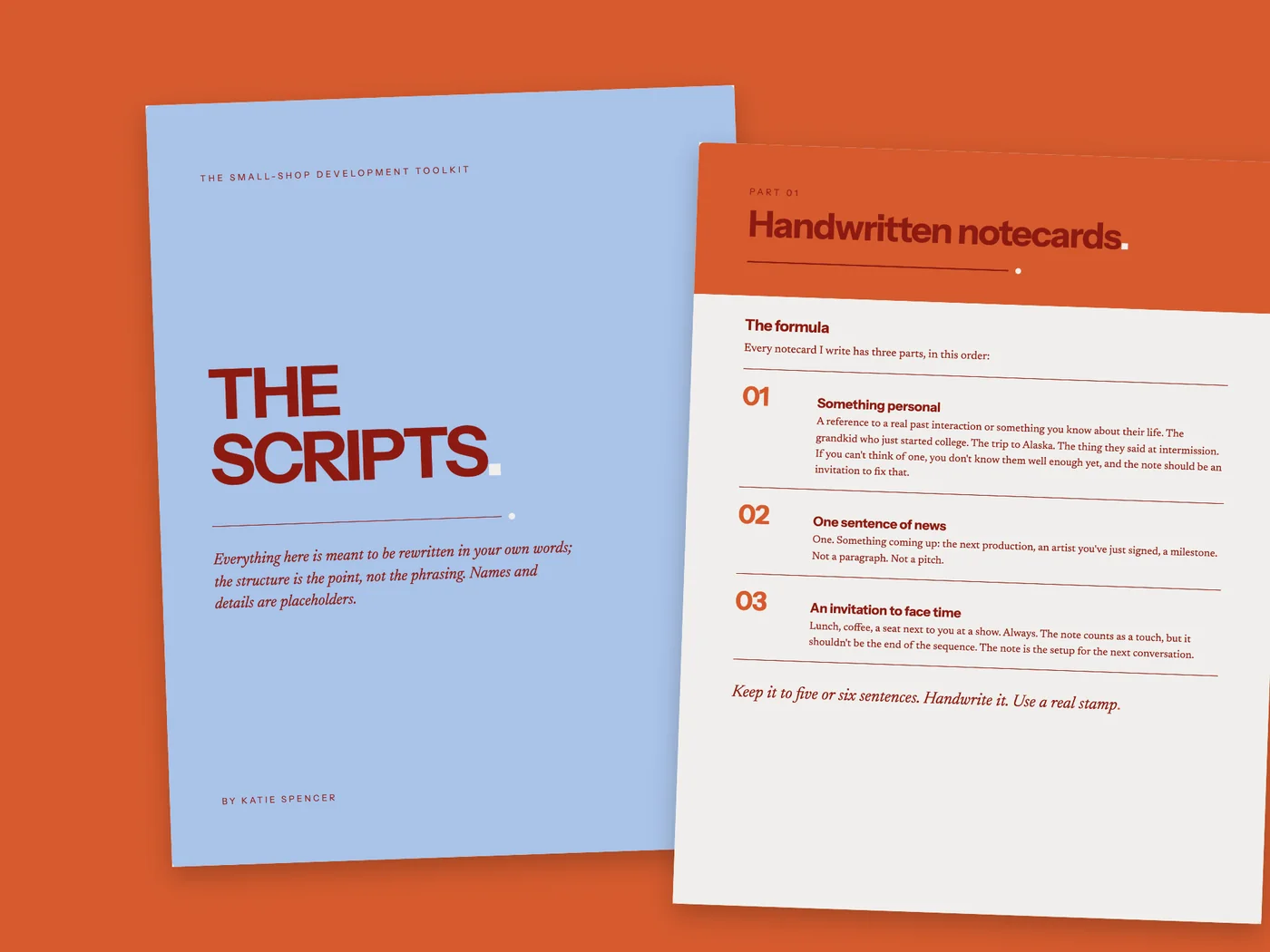
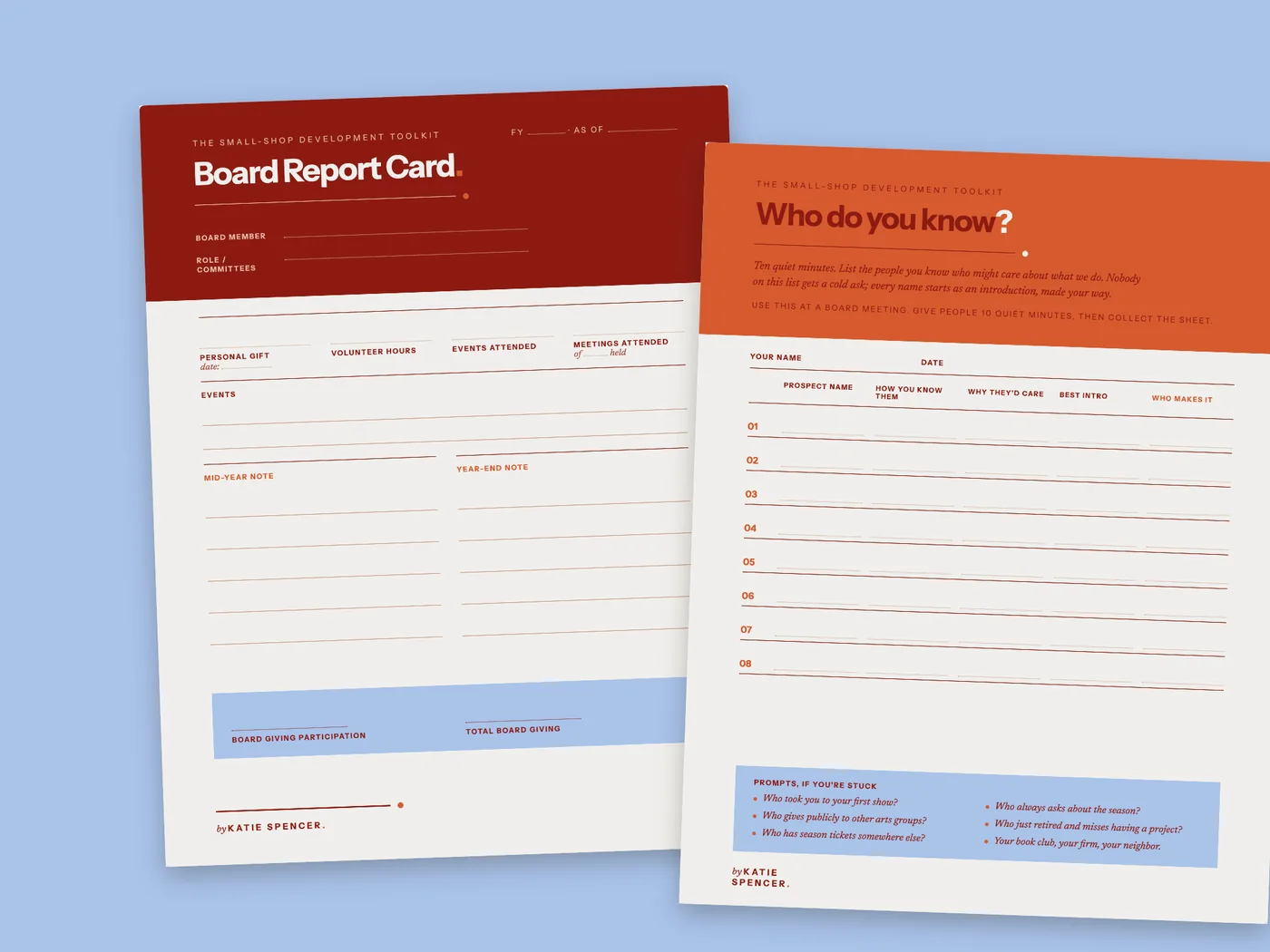
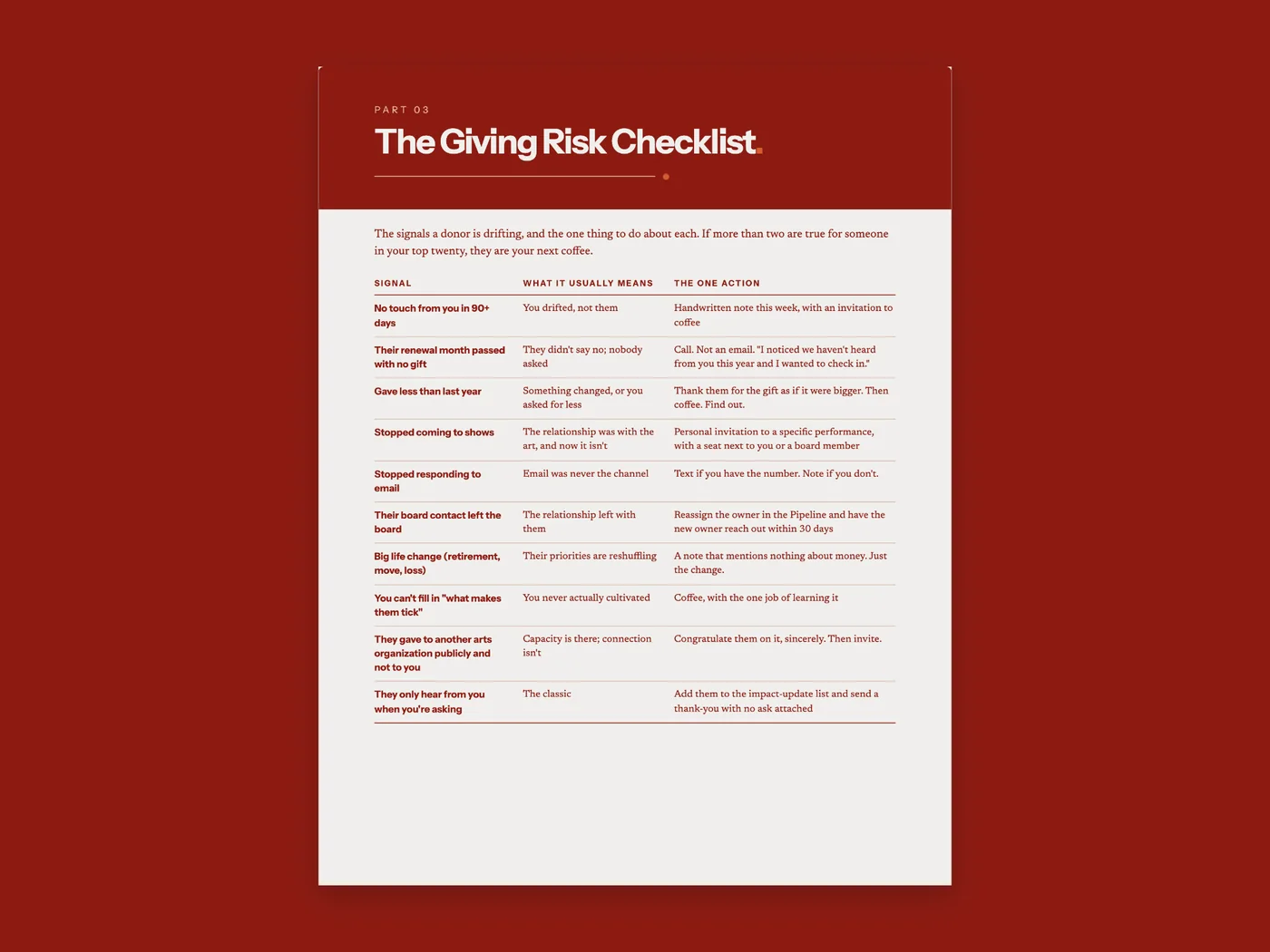
The Small-Shop Development Toolkit
Run a real donor program without a development team.
The Guide. Fifteen pages on how small-shop fundraising actually works: why your top twenty donors matter more than your mailing list, the five-stage pipeline in plain language, the weekly floor, and the Giving Risk Checklist.
The Donor Pipeline Workbook. A Google Sheets workbook you copy and keep. One row per donor, a Dashboard that runs itself, a giving plan, a 12-month communications calendar, a Board Report Card, and the “who do you know” worksheet.
The Scripts. Handwritten notecards for five situations: lapsed-donor outreach, setting the meeting, the ask in five beats, the thank-you call, and what to say after a “no.”
Two printables. A Board Report Card to share at mid-year and year-end, and the prospect worksheet to hand out at a board meeting.
If you are choosing between spending Thursday afternoon redesigning the donation page or having coffee with someone who gave you $500 last year, have the coffee.
The Arts Marketing Kit
Announce and sell a season as an invitation, not a listing.
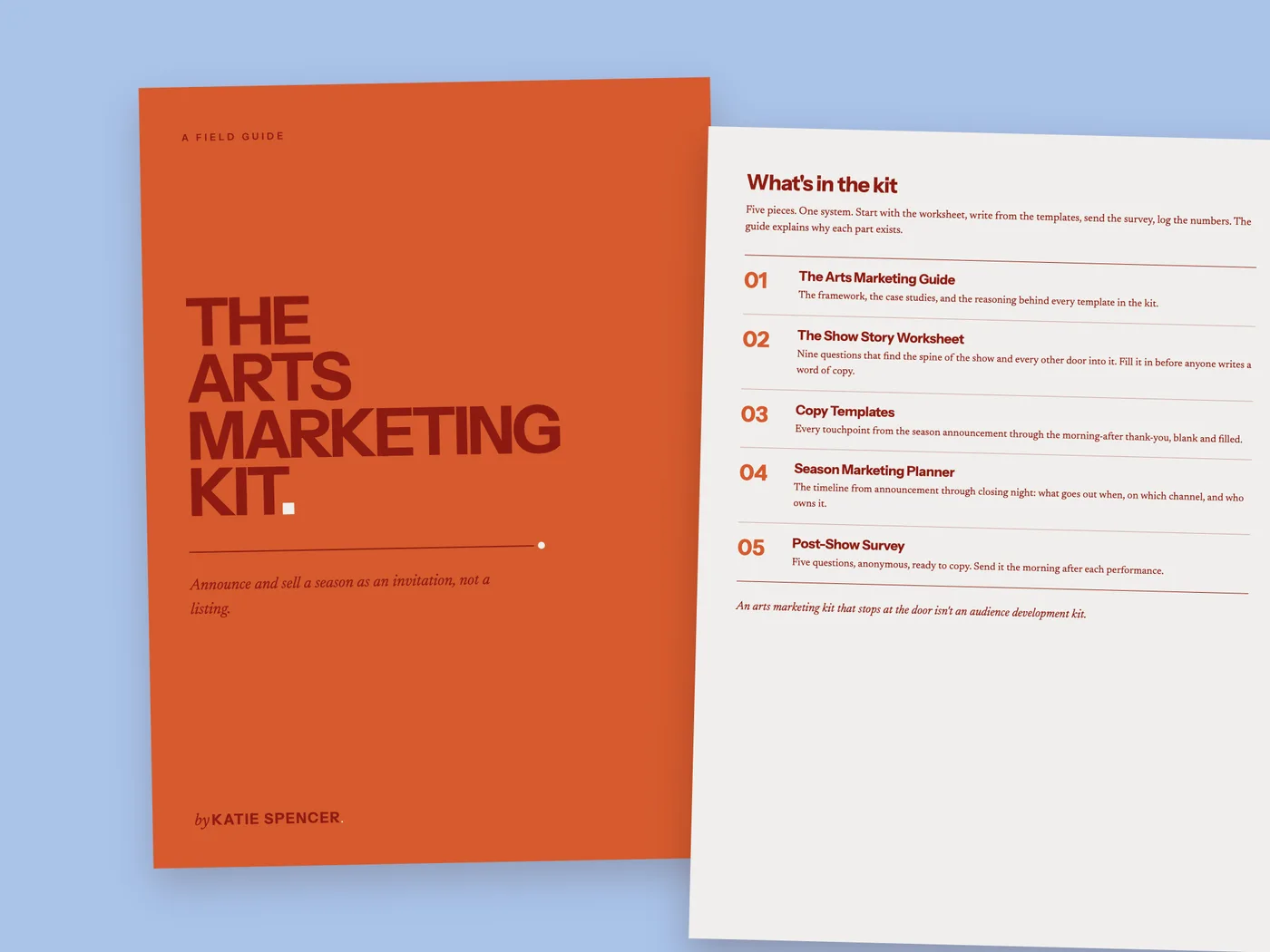
The Guide. Twenty-eight pages on why most season marketing lists what is happening instead of inviting anyone: the two questions every company should ask, three real stories from a real season, and the one-pager nobody wants to write when a production doesn’t land.
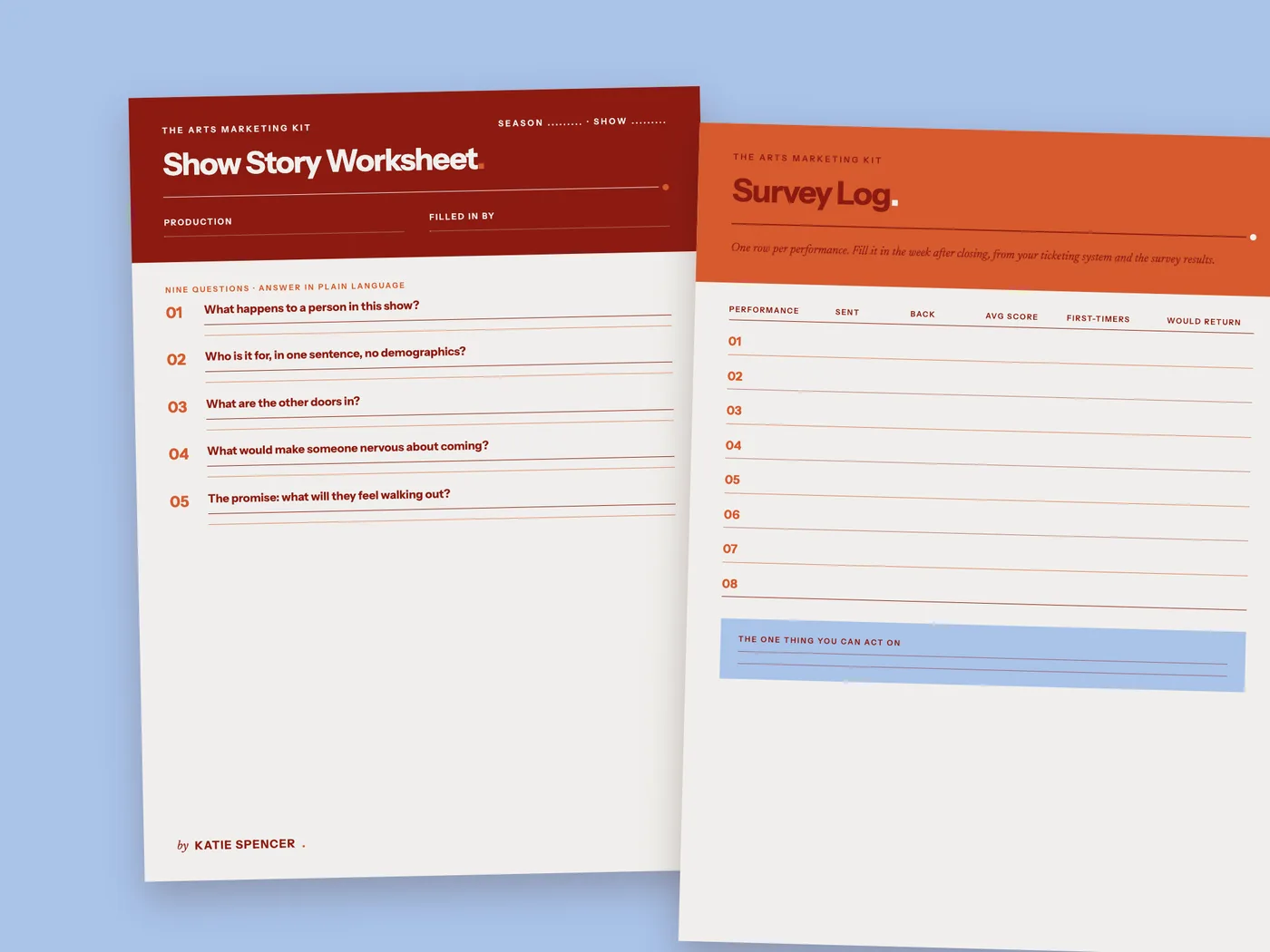
The Season Marketing Planner. A Google Sheets workbook you copy and keep. A season timeline that builds itself from eight anchor dates, an eight-week show sequence to duplicate per production, a channel calendar that shows you the gaps, an Audience Development Scorecard, and a survey log.
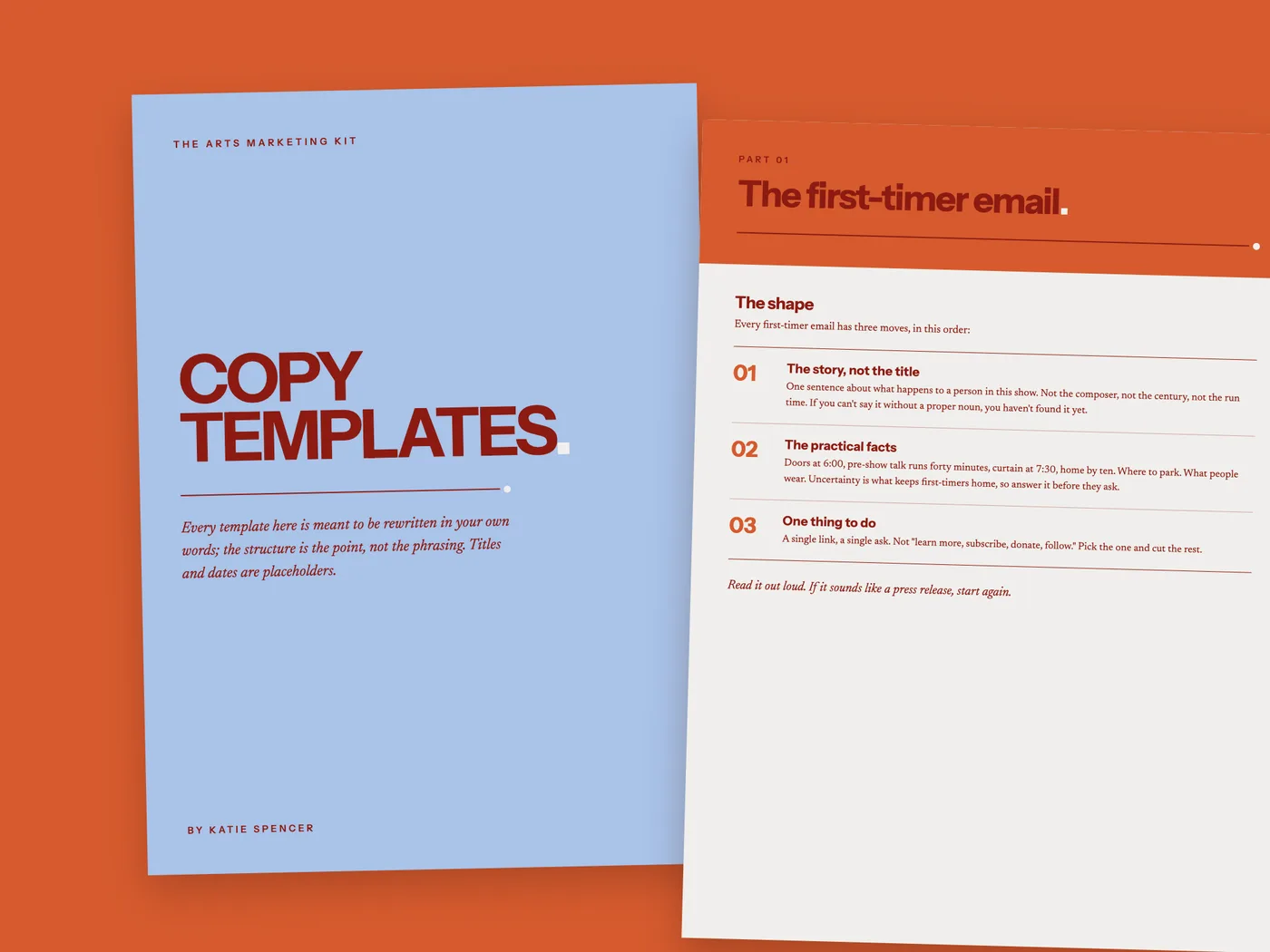
The Copy Templates and the Show Story Worksheet. Every framework blank and then filled with real examples, plus the twenty-minute exercise that makes the rest of them easier.
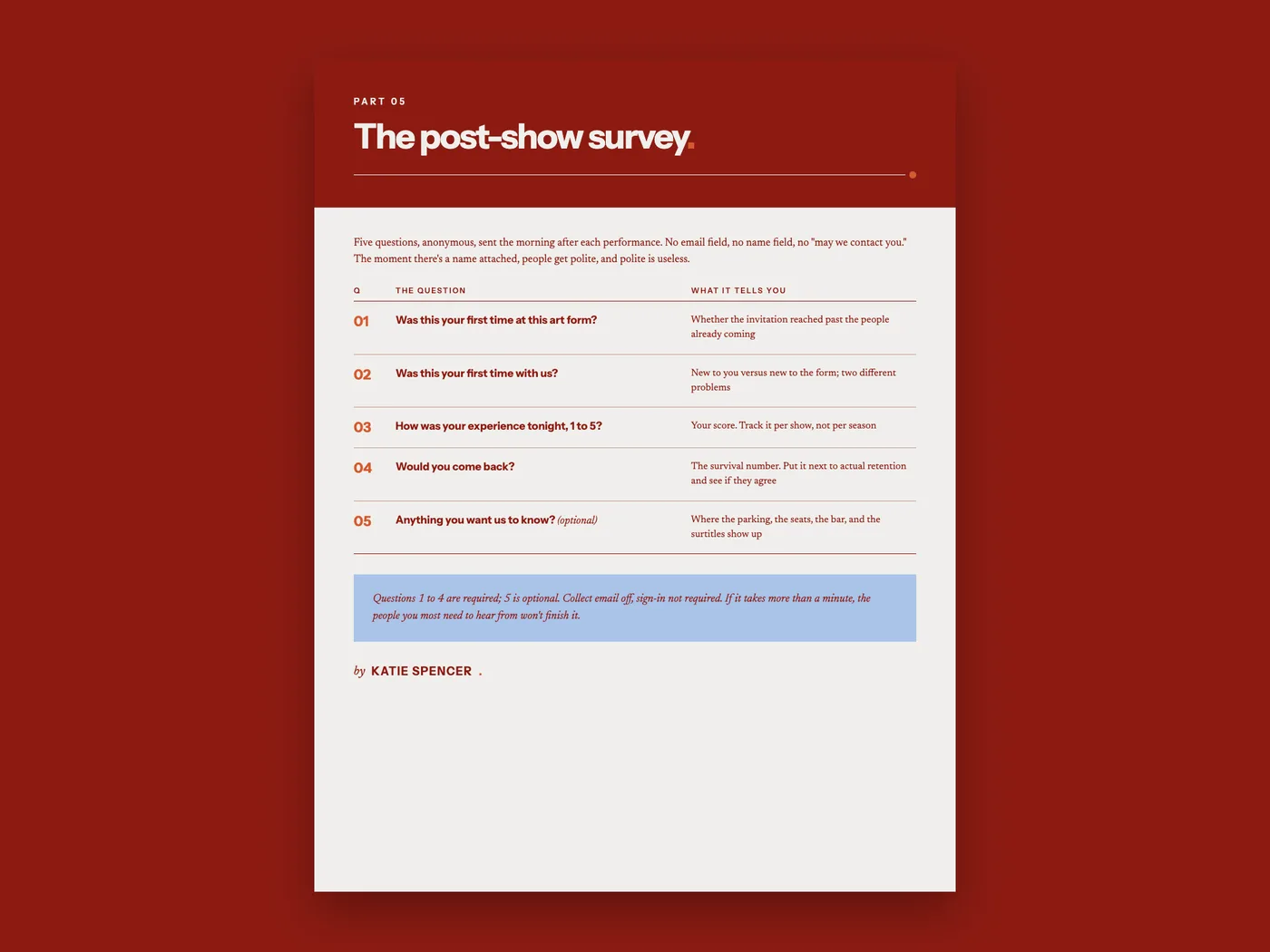
The Post-Show Survey. Five questions, anonymous, sent the morning after. The generator on this site writes the form for you.
If the season announcement goes out Friday and nobody has written the one sentence that says why anyone should come, start here.
The Fundraising Event Toolkit
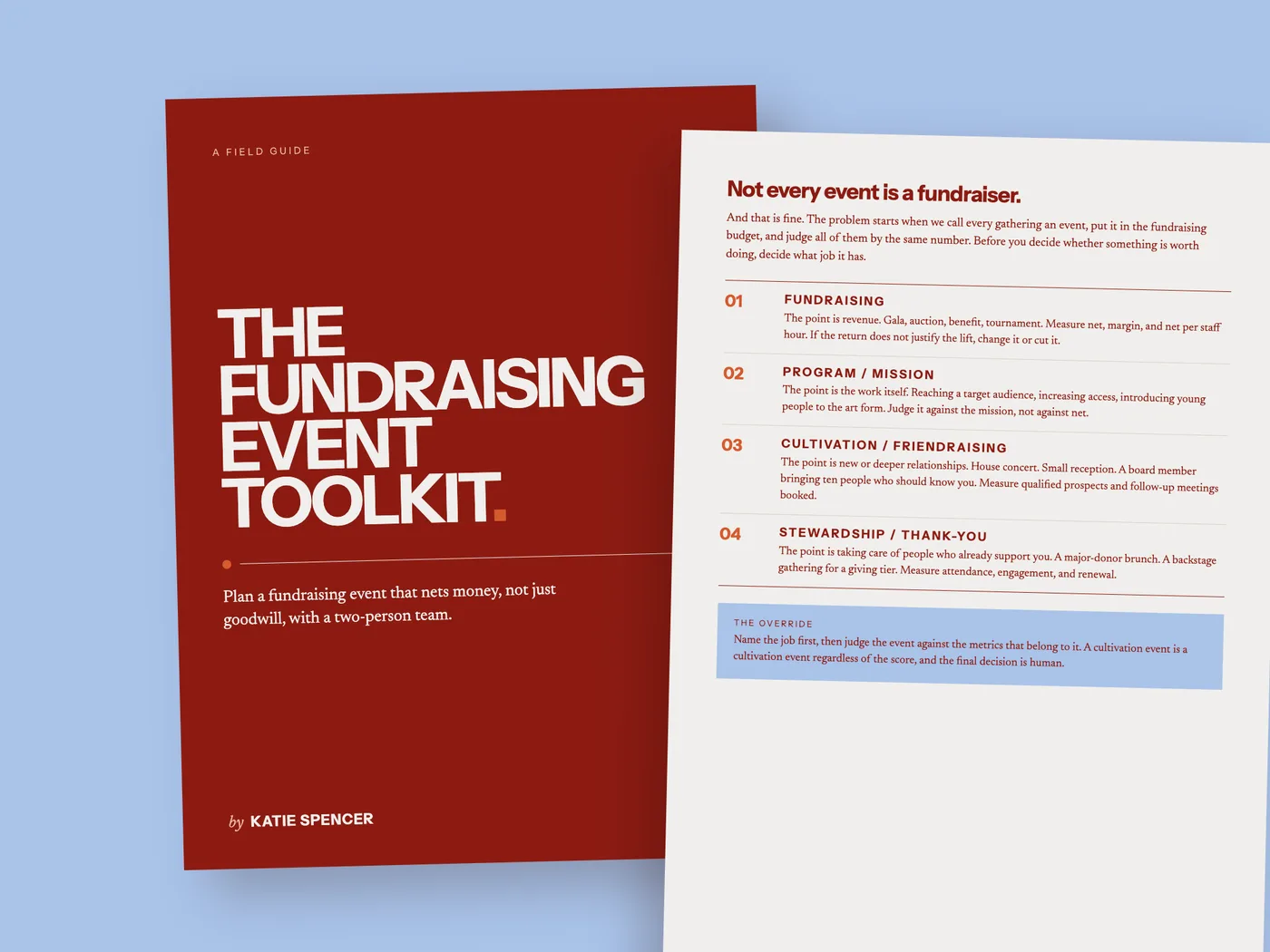
Plan a fundraising event that nets money, not just goodwill, with a two-person team.
The Guide. Why not every event is a fundraiser, and the four jobs an event can actually do. Name the job first, then judge it against the metrics that belong to it, so a cultivation night stops getting graded like a gala.
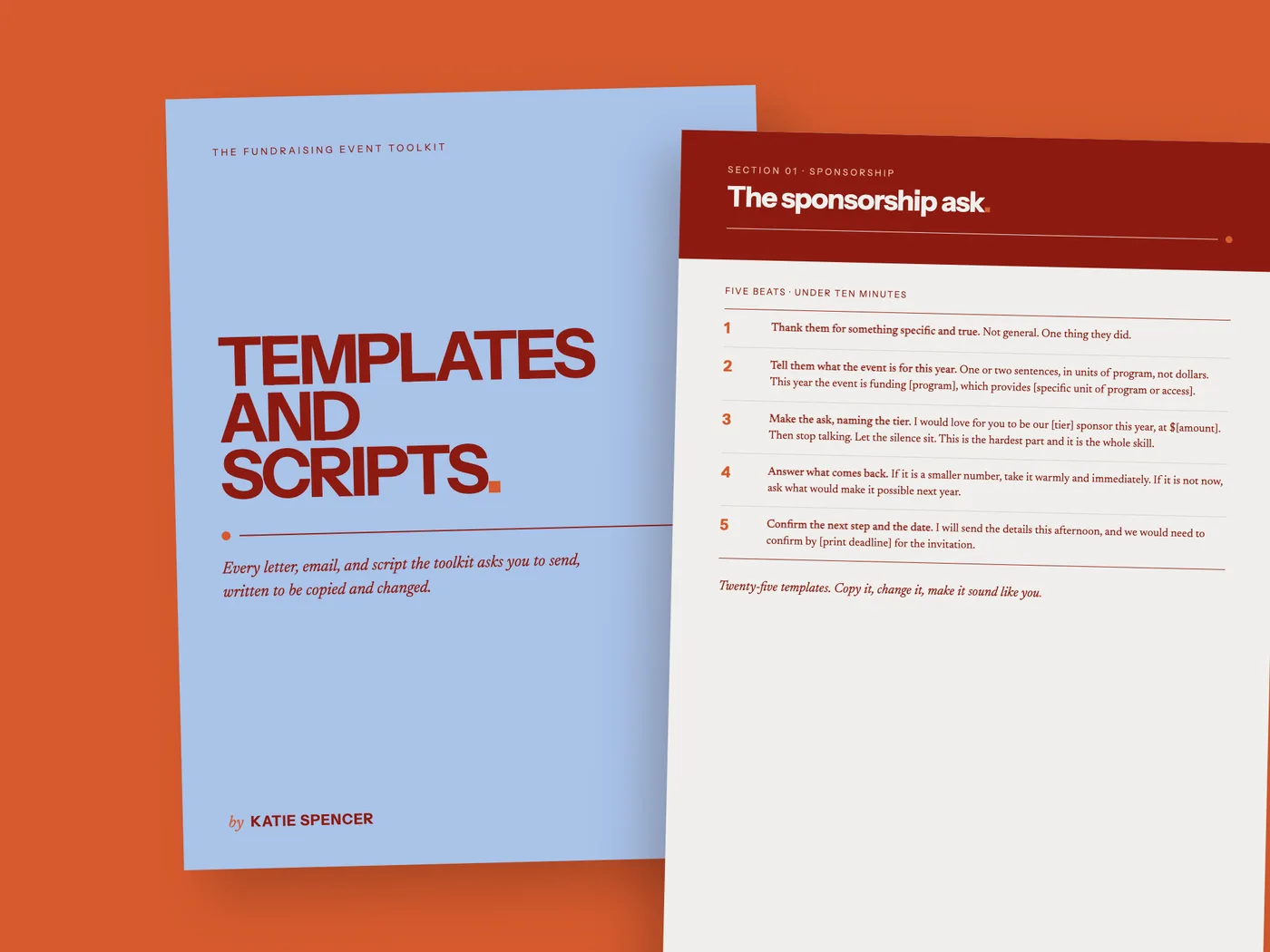
The Templates and Scripts. Twenty-five letters, emails, and scripts, blank and then filled: the sponsorship ask in five beats, the follow-up, and every send the plan asks for, written to be copied and made your own.
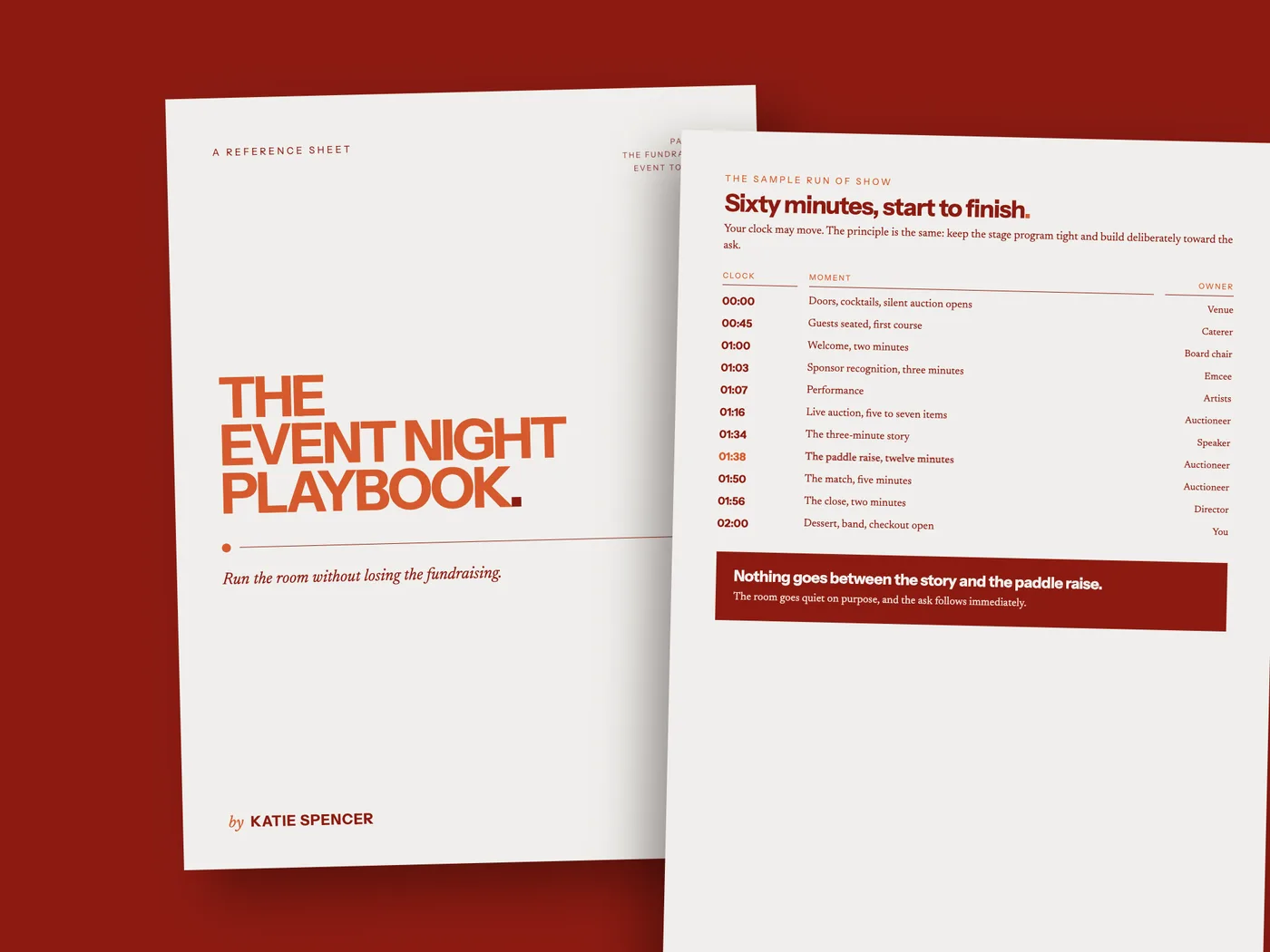
The Event Night Playbook. A minute-by-minute run of show that builds the whole night toward the ask, with the one rule that protects it: nothing goes between the story and the paddle raise.
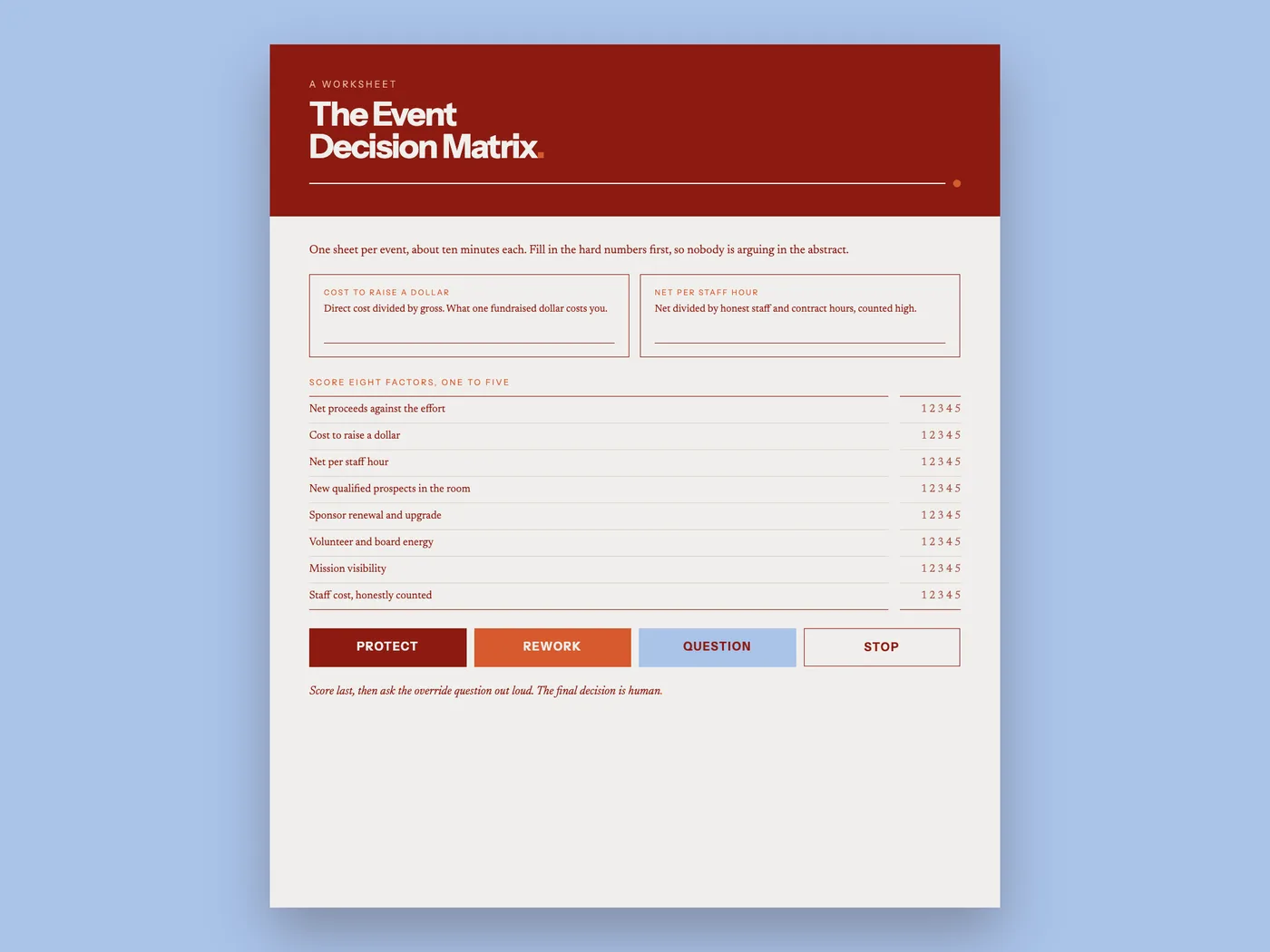
The Event Decision Matrix. A one-page worksheet that scores an event on eight factors and the two numbers that matter, cost to raise a dollar and net per staff hour, so you can protect it, rework it, or cut it on purpose.
If the board wants a bigger gala and nobody has asked what the gala is actually for, start here.
The Small Arts Org Operating Kit
Three jobs, one person, one system. All three toolkits, plus the part that only exists here.
Run a real donor program without a development team.
Announce and sell a season as an invitation, not a listing.
Plan an event that nets money, not just goodwill.
All three calendars on one page, with the weeks they collide. Only in the bundle.
Season Year at a Glance
Put in your season and the planner merges the donor rhythm, the marketing timeline, and the event countdowns into one calendar, then shows you the weeks they collide. Free to try; the download comes with the bundle.
Try the plannerThe toolkits are the do-it-yourself version of the work I do with organizations through Narratives: story strategy for a season, built together.
Narratives → GreenRoom
The workbook is the manual version of what GreenRoom does. When you have more than one person touching donors and the board wants a renewal rate, that’s the point I built it for.
greenroomcrm.com →Instantly, after checkout. The written pieces come as PDFs; the workbooks come as links that make your own copy in Google Sheets. Updates are free for life.
A free Google account for the workbooks. They only work in Google Sheets, so open them there, not in Excel.